
Amarone is not a wine in a hurry. The grapes spend months drying on wooden racks. The must ferments slowly, deep into winter. The wine matures for years in oak casks. And when you finally open the bottle, you taste all that time in every sip.
That is what makes Amarone della Valpolicella so different from virtually every other red wine in the world. No quick harvest and immediate fermentation here. Here, waiting is the most important ingredient.
Valpolicella: wine from Veneto with a character of its own
Valpolicella sits wedged between Lake Garda and Verona, in the western part of Veneto. Rolling hills, cherry orchards, cypresses. Compact and personal. No endless plains full of vines like in parts of France or Spain. The vineyards here are smaller, the producers more approachable.
The grape varieties that grow here are rarely heard of outside Italy: Corvina, Rondinella, Corvinone, Molinara. The Corvina grape in particular is the backbone of everything made in Valpolicella. No international superstar you run into everywhere. Corvina is modest, local, and precisely because of that perfectly suited to what happens here. This grape was not made to impress at a blind tasting. It was made to dry.
Corvina delivers the lion's share of the structure and the signature cherry notes in Amarone. Rondinella adds colour and freshness. Corvinone brings depth. Together they form the classic Valpolicella blend.
Appassimento: the secret behind Amarone della Valpolicella
The heart of Amarone is not in the cellar. It is in the loft.
After the harvest in September, the best bunches are hand-selected and laid out on wooden racks, the so-called arele. Then the waiting begins. Three months, sometimes longer. The windows of the fruttai (drying lofts) stay open, letting cool autumn air from the Alps slowly shrivel the grapes. The berries lose 30 to 40 percent of their weight. Water evaporates. Sugars, acids and aroma compounds concentrate.
This process is called appassimento. It is as old as winemaking in this region itself.
What makes it so special: traditionally the grapes are dried on bamboo racks in well-ventilated rooms. Modern producers nowadays often use climate-controlled drying chambers, but the principle remains the same: grapes, air and time.
Only sometime in January or February, when the rest of the wine world has long finished fermenting, do the Amarone producers begin their vinification. The shrivelled grapes yield a thick, concentrated must that ferments slowly. Sometimes it takes weeks, sometimes months. The result is a dry wine of 15 percent alcohol or more, yet without that burning heat you sometimes feel in other big wines.
That balance between power and elegance. That is what makes Amarone so special.
Three styles of Valpolicella wine, one shared origin
From the same dried grapes come three very different wines. That is what makes Valpolicella so fascinating as a wine region: the same grapes, the same terroir, the same appassimento process, and yet completely different results.
Amarone della Valpolicella: powerful and dry
Amarone is the fully dry version. All the sugar is converted into alcohol. The result is a powerful, complex Italian red wine with flavours of dried fruit, chocolate, tobacco and spice. The finish can literally last for minutes.
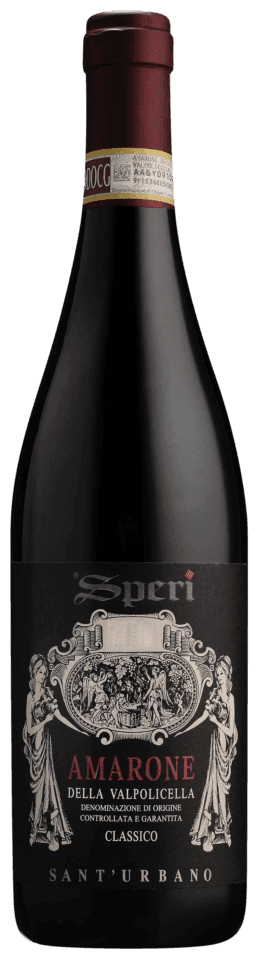
The Speri Vigneto Monte Sant'Urbano is a textbook example. This single vineyard Amarone comes from a winery that has been working the same vineyards for more than a hundred years. The grapes dry for around a hundred days. The wine then matures for two years in French oak tonneaux, followed by a year and a half in large Slavonian oak casks, and finally another year in bottle. Patience as a recipe. Simply put. Incredibly hard to do.
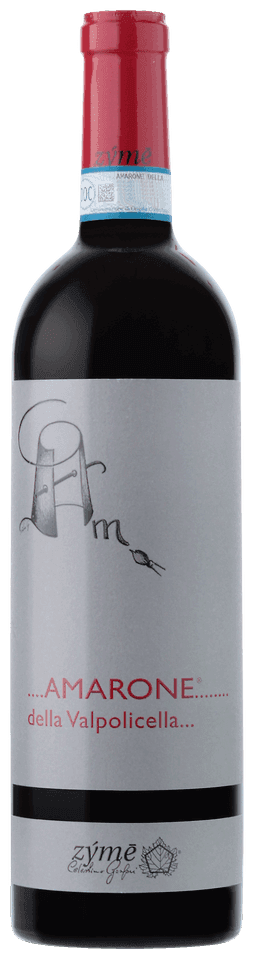
For those who want to experience the full depth of Amarone, the Zyme Amarone della Valpolicella Classico 2018 is an absolute must. Winemaker Celestino Gaspari, son-in-law of the legendary Giuseppe Quintarelli, crafts an Amarone here from five grape varieties, including the rare Oseleta. The wine matures for at least five years in large Slavonian oak. Scores of 96 points from both Falstaff and James Suckling speak for themselves, but numbers never tell the whole story. This is a wine you have to taste to understand.
Recioto: the sweet counterpart
Historically, Recioto was the original wine of Valpolicella. Amarone reportedly came about by accident: a cask of Recioto that fermented too long and turned dry. Amaro means bitter in Italian. The winemaker apparently did not think the result was half bad.
With Recioto, fermentation stops before all the sugar has been converted. What you are left with is a sweet, full-bodied wine. Compare it to Port, but with a completely different flavour profile. More dried fruit, less spirit, more finesse.
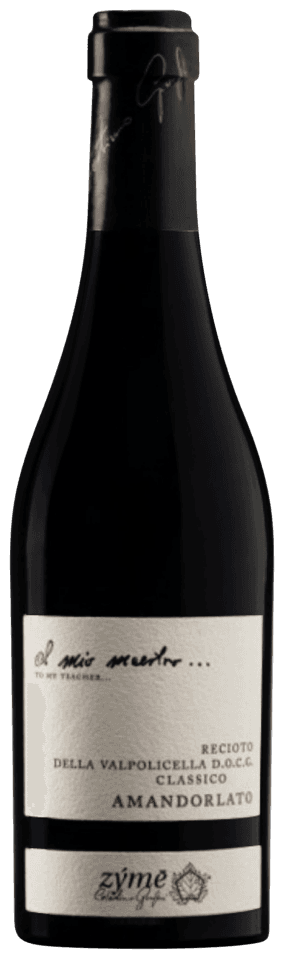
The Recioto Amandorlato 2011 from Zyme is an extraordinary example. Dedicated to master Quintarelli himself, made with wild yeasts in cement tanks, and bottled after more than five years of ageing. Only 1,500 half bottles were produced. Whoever has this in their glass is literally drinking a piece of wine history.
Ripasso wine: the clever middle ground
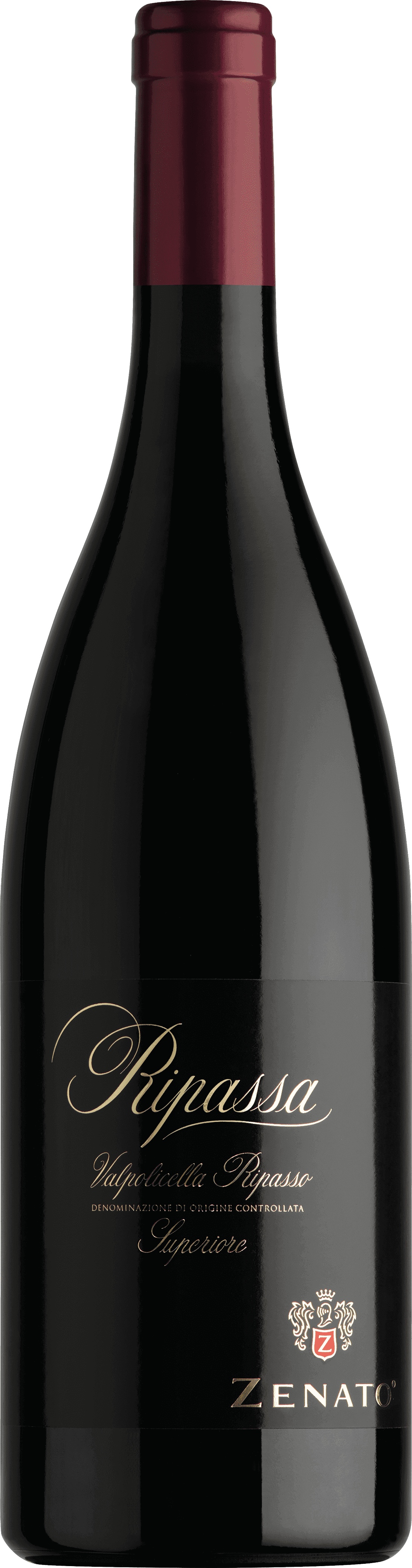
Ripasso is the third style and perhaps the most accessible. After the Amarone production, the pressed grape skins remain, still soaked with aromas and tannins. A lighter Valpolicella is passed over these skins (ripassato, literally "passed again") and undergoes a second, short fermentation.
The result: more body, more complexity, but at a fraction of the price of a true Amarone. If you are looking for something with the warmth and richness of Amarone at an affordable price, Ripasso wine is your answer. Perfect with a hearty pasta or a stew on a Friday night.
Celestino Gaspari and Zyme: the creative mind behind Italy's finest wines
You cannot really talk about wine from Veneto without mentioning Celestino Gaspari. As son-in-law and apprentice of Giuseppe Quintarelli, he grew up among the greatest wines of Valpolicella. But instead of simply repeating his father-in-law's recipe, Gaspari went his own way with Zyme.
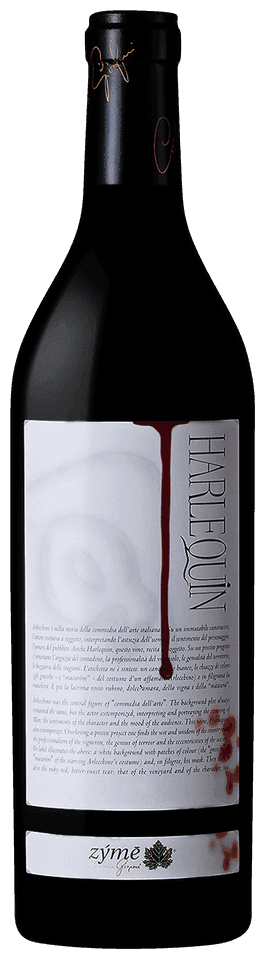
The Harlequin 2017 is the ultimate proof of that. A wine that fits in no box whatsoever. Gaspari uses at least fifteen grape varieties here. Red and white grapes together. Corvina and Rondinella, yes, but also Syrah, Sangiovese, Teroldego, Garganega, Chardonnay and a handful of others.
The name refers to the colourful Harlequin from the Italian commedia dell'arte. And it fits. This is wine as theatre. Every sip reveals something different: jam, forest floor, tobacco, cinnamon, nutmeg, and a minerality that holds it all together. A wine you can pour for ten people and get ten different descriptions back.
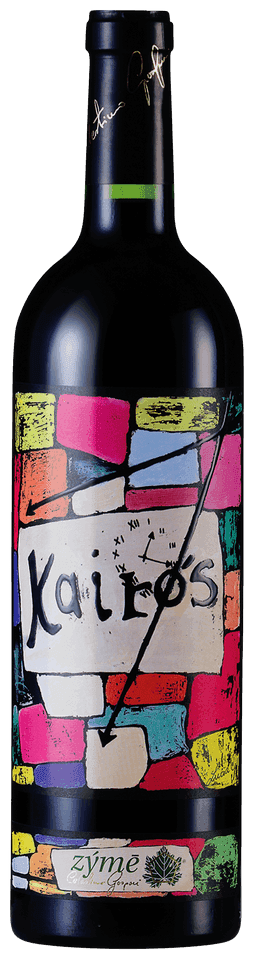
The Kairos 2021 from Zyme is also worth discovering. Made from fifteen grape varieties, just like the Harlequin, but in a more approachable and youthful guise. A fine introduction to the philosophy of the house.
When do you open an Amarone?
Amarone demands attention. A game stew, an ossobuco, an aged Parmigiano Reggiano. That is the company this wine longs for. Serve it at room temperature, preferably opened or decanted an hour in advance. And take your time.
The Recioto is a dessert in itself. With a slice of dark chocolate cake, or simply on its own after dinner, as the evening slowly winds down. And Ripasso? That is the one to uncork on a Friday night with a pizza or pasta. That is exactly the beauty of it: the same family of wines, but for completely different moments.
Store Amarone cool and dark, lying down in a wine rack. A bottle that has been kept too warm loses its finesse. Between 12 and 16 degrees is ideal for longer storage.
Buying Amarone: what to look out for
Buying an Amarone della Valpolicella for the first time? A few things to keep in mind.
Cheap Amarone does not really exist. The appassimento process costs time, labour and grapes. Below 30 euros you rarely get what Amarone is known for. Better a good Ripasso wine than a disappointing Amarone.
Look for "Classico" on the label. It means the grapes come from the original heartland, higher up in the hills of Valpolicella. The vineyards there have more elevation, better drainage and greater temperature swings between day and night. The result: more complexity, more character.
Give the wine time. A young Amarone can come across as closed and austere. Open the bottle at least an hour in advance, or use a decanter. The difference is enormous. With an Amarone that has ten years or more under its belt, decanting is less necessary, but do wait until the wine has come up to temperature.
Vintages matter. As with other great Italian red wines, quality varies from harvest to harvest. 2015, 2016 and 2019 are recent top vintages for Amarone. The 2018 is excellent as well, as the scores of the Zyme Amarone 2018 confirm.
Why Amarone remains one of Italy's finest wines
There are plenty of powerful red wines in the world. Barolo, Brunello, Chateauneuf-du-Pape. Greats, every one of them. But Amarone della Valpolicella does something none of those wines do. The appassimento process gives it a concentration and texture you will find nowhere else. That combination of richness, dryness and balance, with flavours that slowly unfold over minutes in your glass.
The Corvina grape, modest and local, is transformed by this process into something great. That is the magic of Valpolicella wine. It is not the grape that makes the difference, but what you do with it. Or rather: how long you are willing to wait.
Browse our Amarone collection or discover the full collection of Italian wines and taste for yourself what wine from Veneto has to offer.