
Bubbles have an image problem. They get saved for the big moment. The wedding. New Year's Eve. That one promotion. As if sparkling wine is only allowed once there is something to celebrate.
In Champagne itself, they see things very differently. There, champagne is simply wine. A very good one, but simply wine. Poured into a white wine glass, on an ordinary weeknight, alongside dinner. No toast, no occasion.
That attitude deserves to be copied. Whether it is a bottle of prosecco on a Friday afternoon or a brut champagne with a long dinner: bubbles make every moment just a little sharper. Brighter. More festive, without needing a party.
Champagne vs prosecco: what is the difference?
The question comes up all the time: champagne or prosecco? And is champagne really that much better? The honest answer: they are two completely different wines that happen to both sparkle.
With champagne, the second fermentation takes place in the bottle. That is the méthode traditionnelle. The wine rests on its lees for months, sometimes years. That is what gives it that typical bready, creamy character. Nutty depth. Complexity that only fully unfolds after a few sips.
Prosecco works differently. There, the second fermentation happens in large stainless steel tanks, the so-called Charmat method. The result is fresher, fruitier, lighter. Less complex, yes. But that is exactly the point. Prosecco does not need to be complex. It needs to be delicious. And it is.
The difference between champagne and prosecco is not a matter of better or worse. It is a matter of moment. Champagne asks for attention. Prosecco only asks for a glass.
Compare it to music. Champagne is a Debussy piano concert. Prosecco is your favourite song on the car radio with the windows down. Both valuable. Completely different energy.
Buying prosecco: which bottle suits you?
A good prosecco is easy to recognise. Fine, persistent bubbles. Fruity but not sweet. Light enough to enjoy on a summer afternoon, but with enough flavour to serve with food.
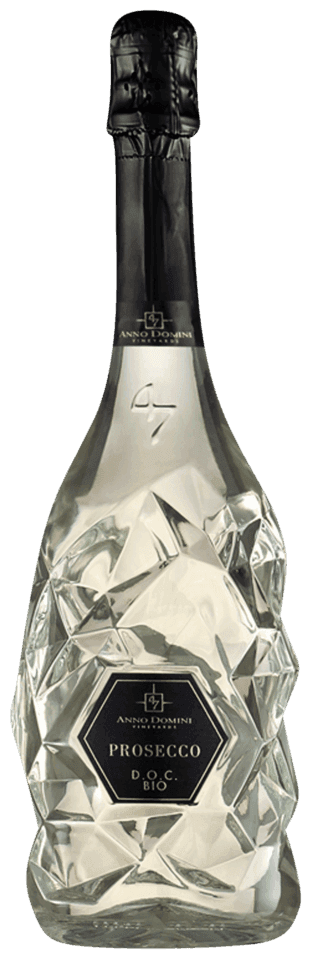
The Prosecco DOC Spumante from 47 Anno Domini ticks all those boxes. Organic, from Veneto, made from the Glera grape. Fine perlage, blossom on the nose, pear and green apple on the palate. No unnecessary frills. A bottle you can always keep chilled in the fridge.
With an aperitif. With a plate of spaghetti vongole. On a Friday afternoon when the working week is done. You do not have to think about it. Just pour and enjoy.
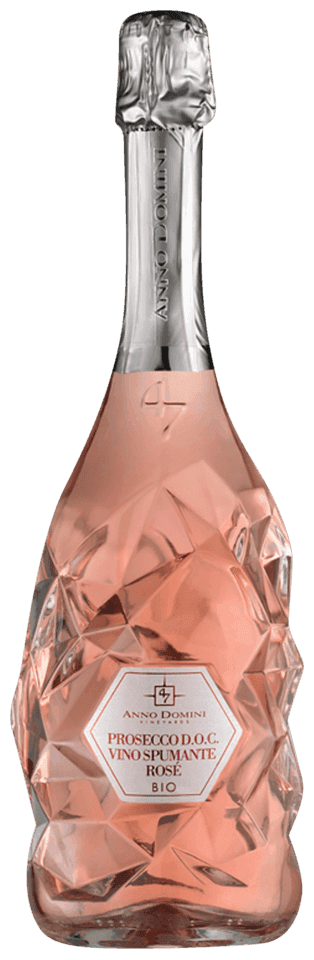
The Prosecco Rosé DOC Spumante is the pink version. Glera topped up with a splash of Pinot Nero. A little more body, a little more red fruit, a beautiful salmon-pink colour in the glass. Lovely with smoked salmon, a charcuterie board, or simply on its own on a terrace.
Both bottles sit around twenty euros. If you are looking for bubbles as a gift under twenty-five euros, these are two safe choices. Everyone is happy to receive a bottle of bubbles. Without exception.
Spumante from Le Marche: the hidden gem
Beyond prosecco from Veneto, Italy has plenty more sparkling wine to offer. One of the finest examples comes from Le Marche, in central Italy.
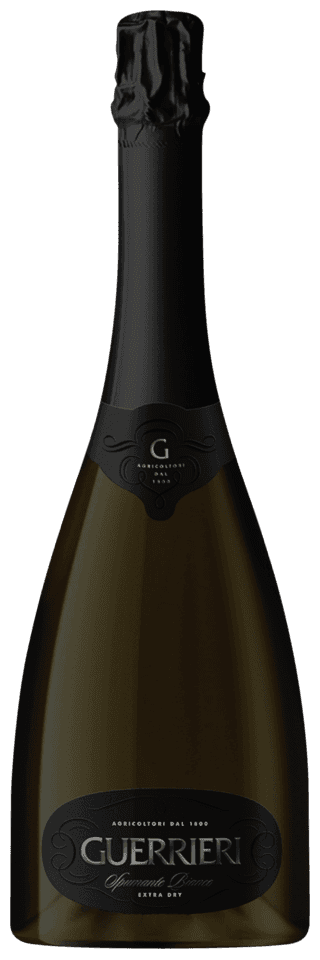
The Guerrieri Spumante is made by a family estate that has been making wine for generations. The blend of Bianchello and Chardonnay delivers something you do not expect. Bianchello is a grape you hardly ever hear about. That is precisely what makes it interesting. You are drinking something your friends do not know, and the bottle costs less than fifteen euros.
In the glass: citrus, green apple, a mineral finish. A touch more serious than a standard prosecco, but at least as easy to love.
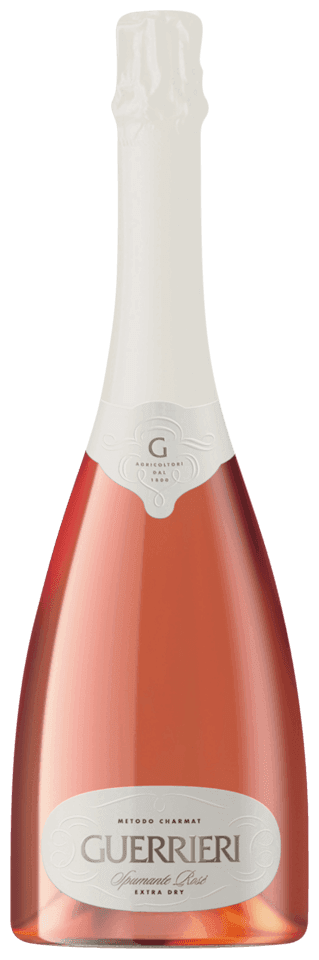
The Guerrieri Spumante Rosé is made from Sangiovese. Yes, the same grape as in Chianti, but as a spumante. Salmon-pink colour, strawberry, raspberry, a hint of rose petals. The perfect bottle for an afternoon in the garden with friends. Also under fifteen euros. Seriously.
In terms of value for money, the Guerrieri bubbles are hard to beat. Under fifteen euros, you rarely find spumante at this level.
Gosset Champagne: the oldest wine house in Champagne
If you want to buy champagne you will not find in every supermarket, you quickly end up at Gosset. Founded in 1584. The oldest wine house in Champagne. Not the most famous. Not the biggest. But ask winemakers and sommeliers, and the name Gosset is always mentioned with respect.
What Gosset does differently from most houses is that it generally avoids malolactic fermentation. Most Champagne producers use it as standard to make the wine softer and rounder. Gosset deliberately skips this fermentation for most of its cuvées. Extra Brut is an exception and does undergo malolactic fermentation, giving this cuvée a more approachable, rounded character while retaining the house's characteristic precision.
Grande Réserve: the best champagne to start with
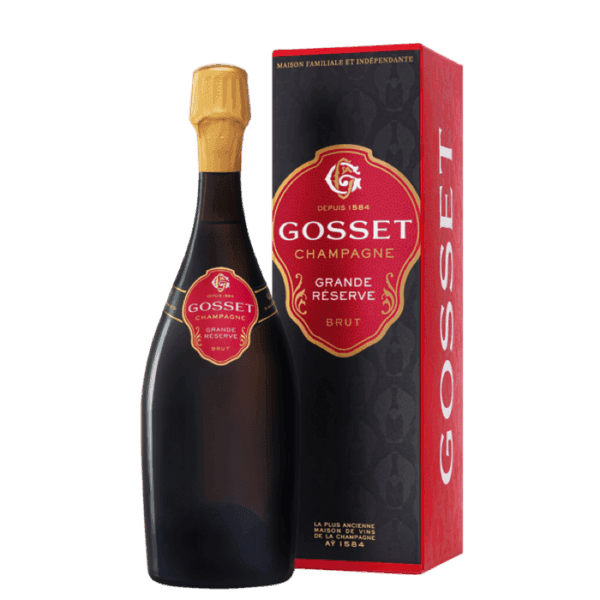
The Grande Réserve Brut is Gosset's calling card. A blend of Chardonnay, Pinot Noir and Pinot Meunier, aged for at least four years in the cellar. Lemon tart and mirabelle on the nose. Creamy and agile at once on the palate.
This is the brut champagne you recommend to anyone who asks: "What is a good champagne to try?" No shouting. No showing off. Craftsmanship in a bottle. The dosage of 8 grams per litre keeps everything in balance. Not too dry, not too sweet. Just right.
Buying champagne for a birthday, a dinner or simply for yourself? Start here.
Cuvée Zero Dosage: champagne without compromise
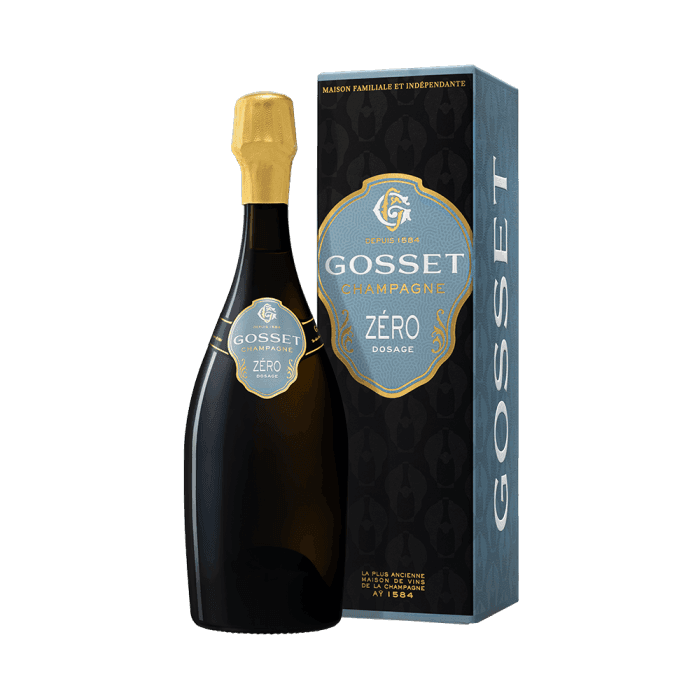
Then the Cuvée Zero Dosage. Zero grams of sugar added after disgorgement. Nothing at all. The wine stands entirely on its own.
Almond paste, ripe lemon, bergamot, a touch of salted butter caramel. And then that taut, almost saline finish. This was the first non-dosage cuvée Gosset ever made. They only released it once they knew the wine could hold up without sugar. That says everything about their confidence in the base quality.
For wine lovers who want it pure. No frills. Only champagne at its best.
12 Ans de Cave à Minima: twelve years of patience in one bottle
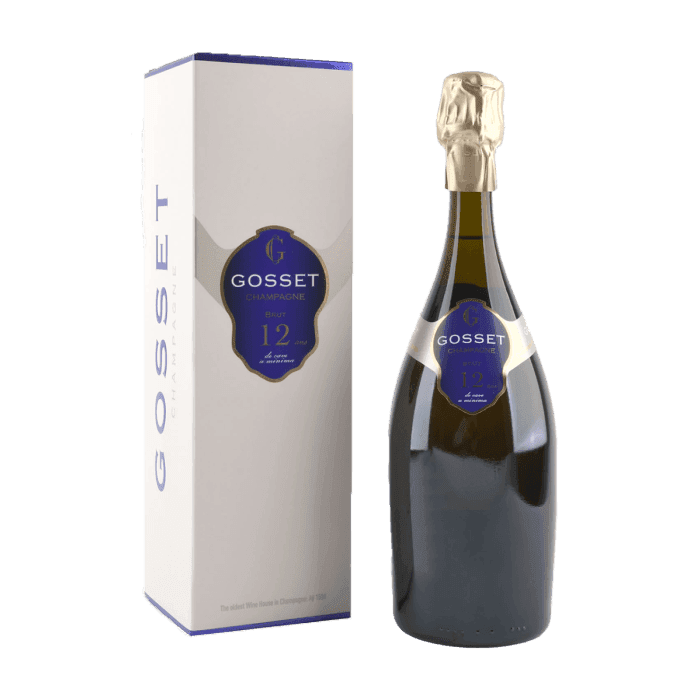
The 12 Ans de Cave à Minima is champagne for those who appreciate patience.
This wine spent twelve years in Gosset's cellars before the label went on. Minimal dosage, just 3 grams per litre. Open the bottle and you smell dried fruit, apricot, candied pineapple, chestnut honey. Deep gold in the glass.
On the palate, layer upon layer. Plums, citrus, minerals, a saline note at the end. After disgorgement, every bottle goes back into the cellar for at least another six months. Because it is not finished yet. Because patience is literally an ingredient here.
This is not a champagne gift for a colleague you barely know. This is the bottle for the moment you want to remember. A marriage proposal. The graduation that took years of work. Or an evening when you decide you want to celebrate something, without knowing exactly what.
Some bottles you keep. This bottle has already been kept. For twelve years. All you have to do is open it.
Which bubbles suit which moment?
Choosing between prosecco, spumante and champagne does not have to be complicated. It is all about the moment.
- Midweek, spontaneous, fridge open: Prosecco DOC or Prosecco Rosé
- Friends over, barbecue, last-minute gift: Guerrieri Spumante or Guerrieri Rosé
- Dinner, birthday, Christmas: Grande Réserve Brut
- Someone who loves wine and tastes the difference: Cuvée Zero Dosage
- The moment you want to remember: 12 Ans de Cave à Minima
Sparkling wine is not for saving
Too many bottles of bubbles sit unopened, waiting for that one perfect moment. That bottle of champagne that has been in the cupboard for two years "for a special occasion." That prosecco from last summer still lying in the fridge.
The perfect moment is tonight. With whatever you are eating. With whoever you are, even if it is just you.
Not sure which bubbles suit you? Browse our collection of sparkling wines or the full collection and order today, with shipping to the Netherlands, Belgium, Germany, Luxembourg, Austria, France, Spain, Italy, Portugal, Switzerland, Andorra and Monaco.